

PokerTalk
NEWS
포톡22d ago

Why Marginal Made Hands Are So Difficult

Video thumbnail 1
Post media 2

A Practical Guide to Playing Tricky Hands in No-Limit Hold’em

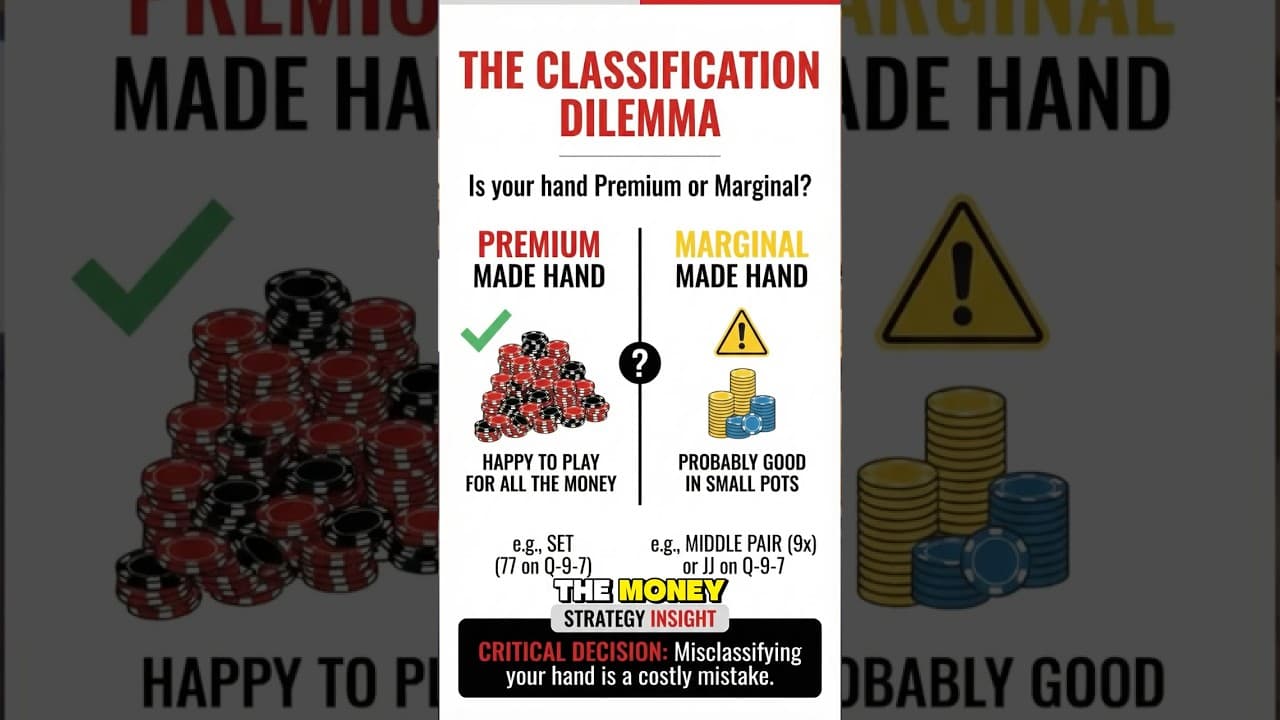
In no-limit Texas hold’em, few hands are more difficult to manage than marginal made hands. These include top pair with a weak kicker, middle pair, or hands like pocket jacks on coordinated boards.

The core problem with marginal made hands is that they perform reasonably well in small pots, but their value drops sharply as the pot grows. This makes aggressive, multi-street betting a risky approach in many situations.

When you continue betting on the flop, turn, and river, opponents are far more likely to continue only with stronger hands. Checking on at least one street, especially on the flop, helps control the pot size and increases the chance of inducing bluffs.

Getting raised after betting with a marginal made hand is usually a bad sign. In practice, most players do not bluff-raise often enough to justify continuing, particularly against straightforward opponents. In these spots, folding is often the correct long-term decision.

A common mistake many players make is calling a turn bet after checking the flop, only to fold every time they face a river bet. This pattern is easy to exploit and leads to unnecessary losses over time.

When playing marginal made hands, it is important to include at least one check, avoid inflating the pot, and commit to a call-down plan when appropriate. If you decide to continue, be prepared to reach showdown. Marginal hands are not about forcing action, but about discipline, planning, and controlled decision-making.

A Practical Guide to Playing Tricky Hands in No-Limit Hold’em In no-limit Texas hold’em, few hands are more difficult to manage than marginal made hands. These include top pair with a weak kicker, middle pair, or hands like pocket jacks on coordinated boards. The core problem with marginal made hands is that they perform reasonably well in small pots, but their value drops sharply as the pot grows. This makes aggressive, multi-street betting a risky approach in many situations. When you continue betting on the flop, turn, and river, opponents are far more likely to continue only with stronger hands. Checking on at least one street, especially on the flop, helps control the pot size and increases the chance of inducing bluffs. Getting raised after betting with a marginal made hand is usually a bad sign. In practice, most players do not bluff-raise often enough to justify continuing, particularly against straightforward opponents. In these spots, folding is often the correct long-term decision. A common mistake many players make is calling a turn bet after checking the flop, only to fold every time they face a river bet. This pattern is easy to exploit and leads to unnecessary losses over time. When playing marginal made hands, it is important to include at least one check, avoid inflating the pot, and commit to a call-down plan when appropriate. If you decide to continue, be prepared to reach showdown. Marginal hands are not about forcing action, but about discipline, planning, and controlled decision-making.
101
0

Comments

Popular Posts
Poker News